Quick answer: A sprinkler blowout uses compressed air to push water out of your irrigation lines so it cannot freeze, expand, and crack your pipes, valves, and heads over the winter. In Denver, you want it done before the first hard freeze, which usually means early to mid October. It can be a do-it-yourself job with the right compressor and care, but the pressure risks lead most homeowners to hire a pro.
Winter comes early along the Front Range, and water left sitting in an irrigation system is one of the most expensive things to ignore before it arrives. A sprinkler blowout is the standard way to winterize a system in Colorado, and getting it done on time is far cheaper than fixing what a hard freeze breaks. Here is what a blowout is, why it matters so much in Denver, how it works, and when to handle it yourself versus call a professional.
What Is a Sprinkler Blowout?
A sprinkler blowout is the process of forcing compressed air through your irrigation system to clear every bit of water from the pipes, valves, and sprinkler heads before winter. Water that stays in the lines will freeze when temperatures drop, and as it freezes it expands with enough force to crack rigid PVC, split poly pipe, break valves, and shatter heads. Draining alone rarely clears a system completely in Colorado, so compressed air is used to evacuate what gravity leaves behind. It is the single most important piece of fall irrigation maintenance here.
Why Winterizing Matters So Much in Denver
Denver’s climate makes this non-negotiable. The first hard freeze often lands in early to mid October, sometimes with little warning, and it does not take a deep cold snap to do damage. A single freeze on water-filled lines can crack buried pipe you cannot see, split the brass backflow preventer, which is one of the most expensive components in the system, and break heads across the yard. You usually will not discover the damage until you turn the system on in spring, when it leaks, floods, or simply fails to run. Spending a little on a fall blowout protects a system worth thousands.
What Happens If You Skip It
Skipping a blowout is a gamble against Colorado winter, and the winter usually wins. The common outcomes include:
- Cracked underground pipe that has to be located and dug up to repair
- A split backflow preventer, often the single costliest part to replace
- Broken or leaking sprinkler heads throughout the yard
- Valves that fail and leave zones stuck on or off
- Hidden leaks that waste water and erode or drown sections of your landscape in spring
A blowout that costs well under a few hundred dollars protects against repairs that can run many times that.
How a Sprinkler Blowout Works
A proper blowout follows a careful sequence, and the pressure settings matter as much as the steps:
- Shut off the water supply to the irrigation system at the main irrigation valve.
- Set the controller to off or rain mode so zones open only when you trigger them during the blowout.
- Relieve the system pressure and protect the backflow preventer according to its type.
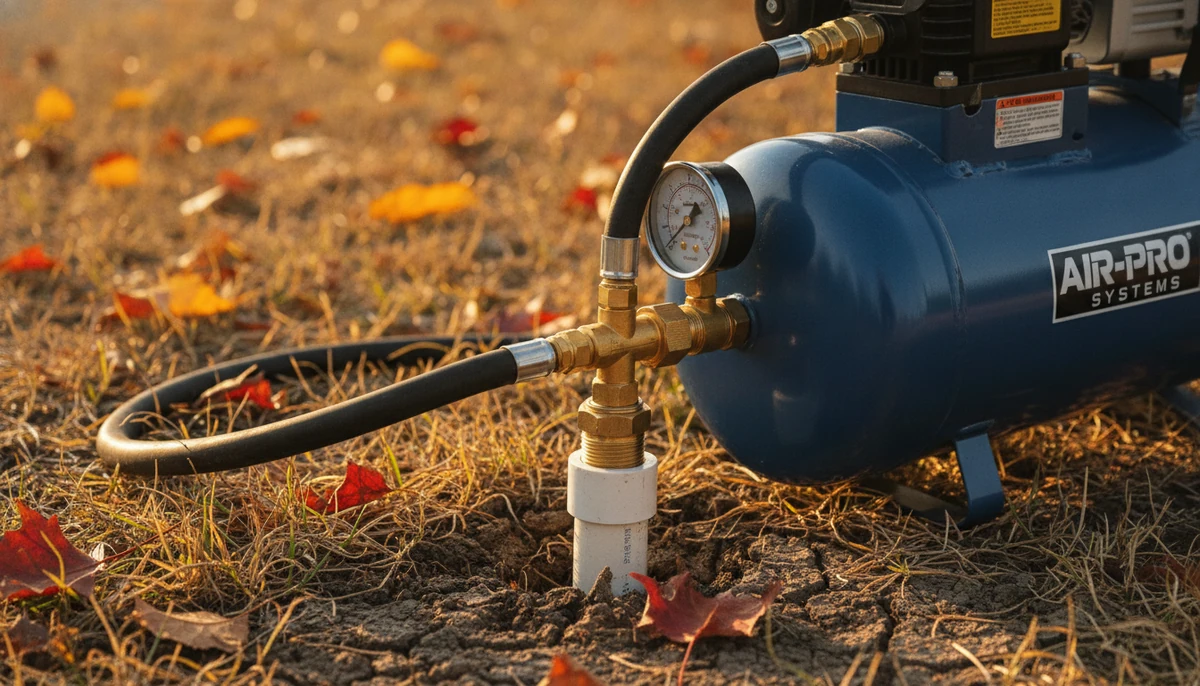
- Connect an air compressor to the system’s blowout fitting using the correct adapter, never a tire chuck pressed onto a head.
- Keep the pressure low and safe: generally under 80 PSI for PVC lines and under 50 PSI for poly pipe. Let air volume, measured in CFM, do the work rather than high pressure.
- Open one zone at a time, starting with the zone farthest from the compressor, and run it only until the heads spit mist instead of water, then move on. Running a dry zone too long overheats and damages the heads.
- Work through every zone, shut down the compressor, release any remaining pressure, and leave the system drained and the controller off for the season.
A few safety rules are worth stating plainly:
- Protect yourself. Wear eye protection and keep your face and body clear of heads, which can pop up with force under air.
- Respect the pressure limits. Never exceed the rating of the lowest-rated component in your system, and do not over-pressurize to speed things up.
- Do not crank a small compressor. A little portable compressor cannot move enough air, and raising the PSI to compensate is the most common way systems get cracked.
Can You Do a Sprinkler Blowout Yourself?
It is possible with the right equipment and a careful hand. The catch is that the equipment is the problem for most homeowners: a typical pancake or home compressor does not move enough air volume to clear the lines, which tempts people to raise the pressure, and over-pressurizing is the leading cause of cracked fittings, launched heads, and injuries. The backflow preventer also needs correct handling. For a small, simple system, a careful DIY blowout is reasonable. For most systems, a professional with a high-volume compressor does it faster and without the risk of turning a winterization job into a spring repair bill. At C&H Landscaping, our team provides sprinkler winterization and irrigation services across the Denver Metro, so your system is cleared correctly and ready to run come spring.
When to Schedule Your Blowout in Denver
Timing is everything. Aim to have your system blown out before the first hard freeze, which along the Front Range commonly arrives in early to mid October. The safest window is late September through the middle of October. Schedule early rather than late, because demand spikes as the cold approaches and a surprise freeze can beat a procrastinating homeowner to it. Once overnight lows start dipping toward the mid-20s, you are on borrowed time, so do not wait for the first snow to remind you.
Frequently Asked Questions
How much does a sprinkler blowout cost in Denver?
Most residential sprinkler blowouts run about $50 to $150, with larger multi-zone systems closer to $200 or more. Pricing usually scales with the number of zones, so a small system costs less than a large one. It is a modest expense compared with repairing freeze-cracked pipes or a split backflow preventer.
When should I blow out my sprinklers in Denver?
Before the first hard freeze, which typically means early to mid October along the Front Range. Late September through mid-October is the safe window. Booking early is smart, since the last-minute rush fills up fast once the forecast turns cold.
Can I just drain my sprinklers instead of blowing them out?
Manual and automatic drain valves help, but they rarely clear every low spot and head in a typical Colorado system, and any water left behind can still freeze and crack a line. Compressed air is the reliable way to winterize here, which is why a blowout is the standard.
What PSI should I use for a sprinkler blowout?
Keep it low: generally under 80 PSI for PVC lines and under 50 PSI for poly pipe, and never above the rating of the weakest component in your system. The water is pushed out by air volume, not by high pressure, so more PSI does not help and can easily cause damage.
I forgot to winterize last year. What should I do?
Before you run the system in spring, have it inspected for freeze damage rather than turning it straight on. A freeze may have cracked a pipe or valve that will leak or flood once the water is back on, so it is better to check first and repair anything that was damaged.
Beat the First Freeze
The best time to winterize is before you need to think about it. If you would rather not risk the pressure settings or chase down a surprise freeze, get in touch with C&H Landscaping to schedule a sprinkler blowout across the Denver Metro before the cold sets in.

At C&H Landscaping, our mission is to transform everyday outdoor spaces into something extraordinary with creative designs and top-notch craftsmanship. Expert Denver landscaping services from custom design to professional installation. We offer tailored solutions that enhance curb appeal, increase property value, and bring your vision to life.