All summer and fall, family and friends gathered around your gorgeous outdoor kitchen. Even in the colder months, it provides enough heat so you can bundle up and prepare elegant meals or tasty desserts to serve with hot chocolate or tea. But whatever your outdoor kitchen ideas might be, you’ll need to protect it from the elements.
In states like Colorado, outdoor living is extremely popular, from the Front Range to the Western Slope, and even in Denver backyards. Suppose your outdoor kitchen doesn’t have a cover, such as a pergola or retractable awning. In that case, it’s vulnerable to adverse weather conditions. Even if you have overhead coverage, your outdoor kitchen can still be damaged by high winds that sweep in rain, snow, and ice.
So the question becomes, “Do I need to cover my outdoor kitchen?” In this guide, we’ll look at the specifics of why that is the best idea and some options to protect your outdoor cooking space.
Who Gains from a Covered Outdoor Kitchen?
An outdoor kitchen is a high-value upgrade to your home, and you want to ensure it continues to function correctly. If you do, it can last for decades without needing a renovation. If you’re wondering the best way to take care of your outdoor kitchen, you’re not alone; many other homeowners share your concern.
- Homeowners who want to protect their investment and extend the lifespan of their outdoor kitchen.
- People living in climates with harsh sun, heavy rain, or snow who need extra protection for appliances and materials.
- Frequent entertainers who rely on their outdoor kitchen often and want it to stay functional, attractive, and low-maintenance.
Not all outdoor kitchens have the same configuration, such as appliances and seating areas. So, first, let’s look at what makes up an outdoor kitchen so we can determine what needs covering and what might not.
What’s Included in an Outdoor Kitchen?
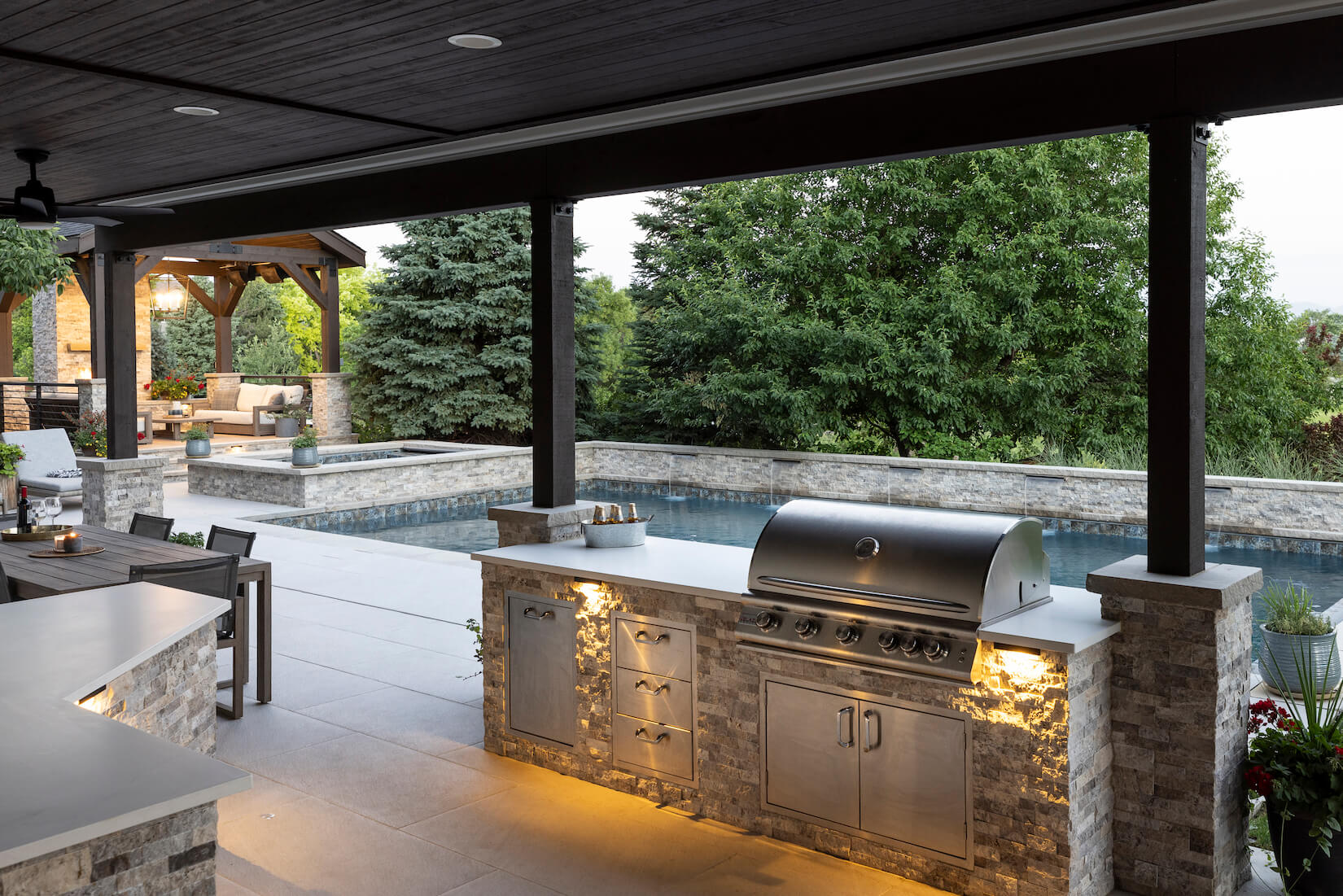
Most outdoor kitchens include more than just a grill, and they can have a variety of different features and configurations that make each one unique. The following is a typical outdoor kitchen setup:
- Built-in grills or cooktops, and in some cases, ovens.
- Countertops made from natural stone or other premium materials.
- Cabinetry or storage such as stainless steel, PVC, or masonry.
- Appliances like refrigerators, ice makers, or side burners.
- Sinks and plumbing fixtures.
- Electrical elements such as outlets or lighting.
- Seating or bar areas.
Each of these components reacts differently to weather, which is why proper coverage, both structural and fitted, is essential for long-term use.
Do Outdoor Kitchens Need to Be Covered?
The short answer is yes. Even if your outdoor kitchen is built with high-quality materials, such as natural stone and stainless steel, it can still be damaged by extreme temperatures, high winds, snow, and heavy rain.
There are actually two main ways to protect your outdoor kitchen: a structural cover, such as a pergola or pavilion, and fitted outdoor kitchen covers for the components, often made from durable sailcloth or weatherproof fabric. Let’s look at both.
What Are Structural Covers for Outdoor Kitchens?
Structural covers protect your outdoor kitchen while making the space more comfortable to use.
The most common options include:
- Pergolas that provide shade and partial protection while keeping the space open and airy.
- Pavilions or fixed-roof structures offer full overhead coverage and the strongest protection in all weather conditions.
- Retractable awnings that extend when you need shade or rain protection and retract during storms or high winds.
Structural components add visual appeal to your overall landscape design while protecting it from extreme temperatures.
What Are Component Covers for Outdoor Kitchens?
Structural protection is the first line of defense, providing permanent protection throughout all seasons. However, you’ll likely need additional protection with fitted covers for your refrigerator and grills, as well as other outdoor appliances. These covers protect your kitchen from wind-blown stones and tree limbs, for example. Common options include:
- Grill covers provide snug, weatherproof protection made from marine vinyl or heavy sailcloth, shielding built-in grills from moisture and freezing temperatures.
- Appliance covers are protective covers for outdoor refrigerators, ice makers, and side burners, keeping sensitive equipment dry and insulated in harsh weather conditions.
- Countertop or full-island covers are waterproof covers that protect stone, concrete, and composite surfaces, as well as the entire kitchen island, from freeze–thaw damage and staining.
Wrapping your outdoor kitchen components is the best way to keep your setup protected and protect the aesthetic appeal. It’s an extra step, but one that is necessary. The last thing you want is to see your outdoor appliances, like a refrigerator, covered in dings and dents from wind-blown rocks and stones.
What are the Benefits of Covering an Outdoor Kitchen?
There are far more benefits to covering your outdoor cooking area than not, and we outline them below:
| Benefits | Why It Matters |
| Weather Protection & Longer Lifespan | Shields appliances, countertops, and cabinetry from extreme temperatures, snow, rain, and UV rays, helping the kitchen last for decades. |
| Comfort & Usability | Makes the space more enjoyable year-round by adding shade, blocking harsh sun, and keeping cooking areas usable during light rain. |
| Reduced Cleaning & Maintenance | Reduces debris, leaves, pollen, and grime, keeping your outdoor kitchen cleaner and requiring less maintenance. |
Ready to Get Cooking With Your New Outdoor Kitchen?
An outdoor kitchen is undoubtedly a significant investment, and it requires regular maintenance and proper protection from harsh weather. But if you love your home and enjoy entertaining, few things are more satisfying than cooking outdoors with family and friends. Most people love serving a great meal and drinks while enjoying a warm breeze or even bundled up on a crisp winter evening.
C&H Landscaping is Denver’s premier landscaping firm, which includes designing and installing amazing outdoor kitchens. Established in 2005, our family-owned business has been creating beautiful landscapes, as well as numerous outdoor construction features, including outdoor kitchens, patios, pergolas, pools, and more.
If you’re considering investing in an outdoor kitchen and would like more information about costs and the process, please don’t hesitate to contact us online or call us at (303) 988-1873. One of our design specialists will be happy to walk you through some options for bringing your vision for an outdoor kitchen to life.

At C&H Landscaping, our mission is to transform everyday outdoor spaces into something extraordinary with creative designs and top-notch craftsmanship. Expert Denver landscaping services from custom design to professional installation. We offer tailored solutions that enhance curb appeal, increase property value, and bring your vision to life.